
Beethoven
What Silence Composed
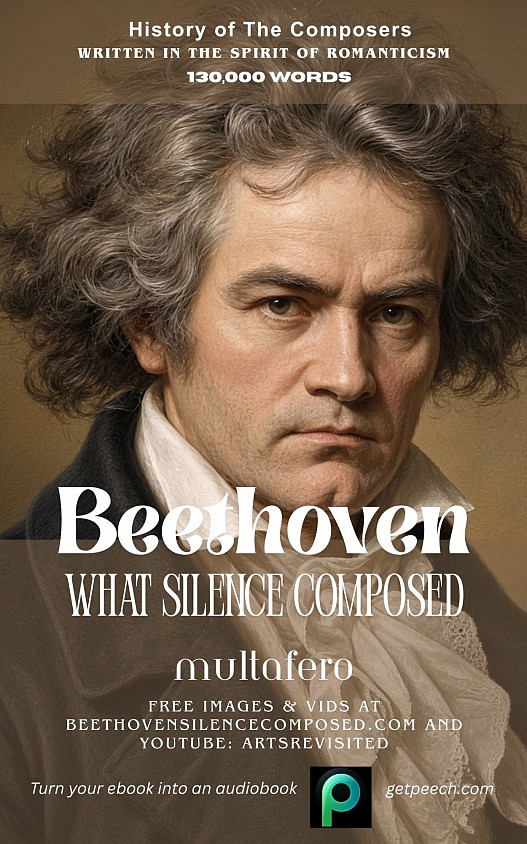
Ludwig van Beethoven (1770–1827) transformed Western music, bridging Classical form with Romantic expression. Born in Bonn to an abusive, alcoholic father who forced his musical training, Beethoven studied under Neefe and published his first works by age 11. In 1792, he moved to Vienna, studying under Haydn and gaining fame as a virtuoso pianist and bold composer. By his late twenties, Beethoven began suffering progressive hearing loss. Retreaving to Heiligenstadt in 1802, he wrote a desperate letter confessing his suicidal despair, ultimately vowing to live for his art. This crisis launched his Heroic Period, marked by grand, dramatic works reflecting triumph over adversity—most notably his Eroica Symphony, the famous Fifth Symphony, the Pastoral Sixth, and his opera Fidelio. Personal turmoil marked his later years, including a bitter legal battle over the custody of his nephew Karl, severe health problems, and complete deafness. Isolated from society, he communicated through conversation books. Yet, his final Late Period produced some of history’s most visionary masterpieces, including the monumentally complex Missa Solemnis, his groundbreaking late string quartets, and the monumental Ninth Symphony—the first major symphony to incorporate vocal solos and chorus, featuring the iconic "Ode to Joy." When Beethoven died in Vienna in 1827 at age 56, over 20,000 mourners attended his funeral. He left behind a legacy that permanently reshaped classical music from courtly entertainment into a profound medium for human emotion and spiritual depth.